Abstract :
[en] Overexcitability and sensory profile of highly gifted children and impact on emotional difficulties
Simoes Loureiro, I., Wauthia, E., Scherpereel, C., Rossignol, M., Lefebvre, L.
Cognitive Psychology and Neuropsychology department, Institute of Health sciences and technologies, University of Mons
Correspondence: Isabelle Simoes Loureiro, Cognitive Psychology and Neuropsychology department, University of Mons (UMONS), Place du Parc, 18, 7000, Mons. Email: isabelle.simoesloureiro@umons.ac.be
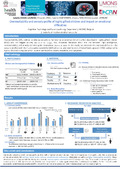
Objective. Overexcitability (OE), defined as intense sensations for internal or external stimuli, is often described in highly gifted children (HGC) and can trigger anxiety. However, results concerning OE and anxiety in HGC are quite fluctuating. The aim of this study was to assess OE in HGC and to explore which aspects of OE are linked to anxiety symptoms. Participants and method. We tested 20 HGC (Total Intellectual Quotient=132.45+/-8.6; 11 boys; age=132.15 months+/-18.68) and 20 control children (General Ability Index=105.5+/-7.6; 11 boys; age=129.95 months+/-18.78). The Sensory Profile (SP) (measuring sensitivity for auditory, visual, tactile, body position, multisensory processing and emotional reactivity) was administered. Body perception (BP) awareness was evaluated with the BP Questionnaire. The Revised-Children's Manifest Anxiety Scale (RCMAS) (including measures of physiological symptoms of anxiety, worries and oversensibility) and the Childhood Anxiety Sensitivity Index (CASI) (including measures of social concerns and concerns about physical symptoms of anxiety) were also administered. Results. HGC showed an heigthened sensitivity for auditory, visual, tactile, body position and multisensorial information processing as well as an emotional overreactivity (SP) and more social concerns (CASI) (p<.05). Regression analyses led on HGC showed that physiological symptoms of anxiety (RCMAS) were explained by an increased BP awareness and by the fear of losing the control over their symptoms (CASI) (p=<.05). Oversensibility (RCMAS) was explained by the presence of concerns about their physical symptoms (p=.049) as by the total anxiety sensitivity level (CASI) (p=.001). Conclusions. Our results suggest a specific sensory profile in HCG, with heightened sensitivity and intensity of experience. Moreover, emotional difficulties, that are frequently reported in HGC, could be attributed to disturbed perception, interpretation of and worries about symptoms.
Keywords: Highly gifted children, hyperstimulability, anxiety, sensory profile