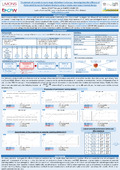
Treatment of anomia in early stage Alzheimer's disease Investigating the efficacy of Elaborated Semantic Feature Analysis using a single-case experimental design - 2023
Treatment of anomia in early stage Alzheimer's disease Investigating the efficacy of Elaborated Semantic Feature Analysis using a single-case experimental design
[en] Anomia occurs early in Alzheimer's disease (AD) and has a significant impact on daily life. This study aimed to investigate Elaborated Semantic Feature Analysis (ESFA) method on anomia. Grounded in network models of semantic memory, ESFA seeks to enhance lexical retrieval by activating and strengthening semantic concepts. Six patients with early-stage AD were recruited (MMSE>20). The experimental design employed a single case experimental approach with the following phases. A baseline phase lasting three weeks which included naming task and a semantic matching task administered three times to establish a pre-therapeutic baseline. This was followed by an intervention phase lasting eight weeks involving two 50-minutes sessions per week. During treatment sessions, concepts failed in the naming task were selected for each participant and a semantic feature analysis chart was completed to activate the properties of the concepts. Two follow-up phases spanned four weeks: the naming and semantic matching tasks were administered once directly after the end of the treatment and once four weeks after the treatment phase. In addition, neuropsychological assessment was carried out during the baseline and follow-up phases. Executive functions, episodic memory, lexical-semantic and speech abilities were assessed. Anxio-depressive affect and quality of life were also assessed. The preliminary results showed small effect sizes for six participants. Moreover, a comparison of baseline and intervention trends (using non-overlapping data statistics) indicated a significant therapeutic effect (p-value < 0.05). Therefore, there was a progressive improvement in naming performances. In conclusion, ESFA was effective in improving participants’ naming abilities.
Disciplines :
Theoretical & cognitive psychology
Author, co-author :
Semiz, Melike ; Université de Mons - UMONS > Faculté de Psychologie et des Sciences de l'Educatio > Service de Psychologie cognitive et Neuropsychologie
Simoes loureiro, Isabelle ; Université de Mons - UMONS > Faculté de Psychologie et des Sciences de l'Educatio > Service de Psychologie cognitive et Neuropsychologie
Language :
English
Title :
Treatment of anomia in early stage Alzheimer's disease Investigating the efficacy of Elaborated Semantic Feature Analysis using a single-case experimental design
Publication date :
23 November 2023
Event name :
NEUROCOG
Event date :
23-24 novembre 2023
Audience :
International
Research unit :
P325 - Psychologie cognitive et Neuropsychologie
Research institute :
R550 - Institut des Sciences et Technologies de la Santé