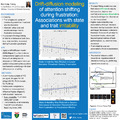
[en] Background: Irritability, a common and impairing symptom occurring in many mood and anxiety disorders, is conceptualized as aberrant behavioral and emotional responses to frustrative nonreward. Computational modeling provides parameter estimates reflecting underlying latent cognitive processes and has proven useful in unpacking task-based behavior; however, this approach has yet to be applied to tasks probing frustrative nonreward. A computational modeling approach has the potential to provide a more nuanced understanding of the cognitive mechanisms of irritability, which may elucidate links between task-based frustration and irritability while also revealing potential targets for mechanism-based interventions. The aim of this study was to apply the drift-diffusion model (DDM) to the Affective Posner Task (AP) to determine if DDM parameters are useful in uncovering individual differences in irritability. Method: A sample of 152 young adults ages 18-25 years (Mage = 20.93, SD = 1.98, 75.2% females) completed the AP and self-reported measured of state and trait irritability. Stepwise regression models were used to test the hypothesis that DDM parameters predict state and trait irritability above and beyond traditional reaction time and accuracy metrics. Results: Higher state irritability was predicted by lower decision threshold during the frustration block, and larger decrease in the decision threshold parameter between non-frustration and frustration blocks, above and beyond typical metrics of AP performance. Conclusion: DDM parameters, reflecting latent cognitive processes, were linked to individual differences in state irritability. More specifically, higher state irritability during the task was associated with an impulsive decision-making style (preferring speed over accuracy) during frustration, as revealed by the decision threshold parameter. These findings have potential clinical implications, suggesting that decision threshold may be an intervention target for individuals with high irritability. The utility of DDM awaits validation in populations with clinical levels of irritability.
Disciplines :
Neurosciences & behavior
Author, co-author :
Tseng, Wan-Ling
Bellaert, Nellia ; Université de Mons - UMONS > Faculté de Psychologie et des Sciences de l'Educatio > Service de Psychologie cognitive et Neuropsychologie
Castagna, Peter; University of Alabama System [US-AL] > Psychology
Deveney, Christen
Crowley, Michael
Language :
English
Title :
Drift-diffusion modeling of attention shifting during frustration: Associations with state and trait irritability
Publication date :
03 December 2023
Event name :
American College of Neuropsychopharmacology Conference