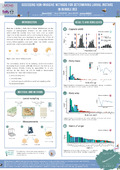
[en] Bees are critical for pollination services but are threatened by numerous anthropogenic stressors, including agrochemical exposure. While the impacts of these stressors on adult bees have been extensively studied, their effects on bee larvae remain poorly understood. So far, the only known method to measure larval stage (i.e., head capsule measurement) is invasive and increases the risk of larval mortality. To address this limitation, we evaluated three less-invasive methods to determine larval instar (i.e., measuring larval body mass, measuring larval body area, and extrapolating instars from larvae of a same batch). However, neither larval body mass nor larval body area appeared to cluster larvae into distinct instar stages. Additionally, larvae from the same batch did not consistently exhibit uniform instars, highlighting the risks of batch-based extrapolation. Although no fully reliable less-invasive methods were established, we encourage future research to include larval body mass or larval body area in their analyses.
Disciplines :
Environmental sciences & ecology
Author, co-author :
Fievet, Manon ; Université de Mons - UMONS > Faculté des Sciences > Service Écologie des Interactions et Changements Globaux
Tougeron, Kévin ; Université de Mons - UMONS > Faculté des Sciences > Service Écologie des Interactions et Changements Globaux
Michez, Denis ; Université de Mons - UMONS > Faculté des Sciences > Service de Zoologie
Gekiere, Antoine ; Université de Mons - UMONS > Faculté des Sciences > Service de Zoologie
Language :
English
Title :
Assessing non-invasive methods for determining larval instars in bumble bee