Abstract :
[en] As it is in population knowledge, the way of living is more sedentary than it has been
the case in past years. Therefore, indoor air and more specifically its quality is a
major concern as it has an impact on people’s health. Nevertheless, some pollutants
are emitted inside buildings through common life sources such as construction
materials, adhesives or paint. Among those, VOCs (Volatile Organic Compounds)
can be found with the biggest proportion and some of them such as benzene or
formaldehyde are known to cause severe diseases linked to heart, lungs and
kidneys. Given that BTEXs (Benzene, Toluene, Ethylbenzene and Xylene) comprise
the largest proportion of VOCs, this has prompted extensive research into
remediation systems for their removal over the past few years.
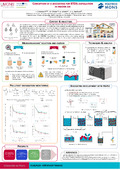
The aim of this PhD thesis is to find a sustainable and a biological remediation using
biocoatings containing different immobilized microorganisms capable of degrading
BTEXs thanks to their enzymatic activity. Different types of microorganisms are used
such as fungi (P. Chrysosporium, P. Ostreatus, T. Versicolor) and bacteria (P. Putida,
R. Rhodochrous, R. Ruber).
An analytical method was developed to monitor BTEXs degradation with specific
aspects due to fungi and bacteria characteristics. Attention was
then focused on the maximum inhibitory concentration (MIC) test, in order to assess
the ability of all microorganisms used to both degrade BTEXs and grow in “highly”
polluted media. Those tests were conducted in liquid medium with o-xylene taking a
range of concentration going from 25 to 100 ppm. They confirmed the ability of these
microorganisms to degrade BTEXs even at high concentrations, which is promising
since, under typical atmospheric conditions, BTEX concentrations are much lower
than those tested here.