Leveraging esketamine to enhance cognitive recovery in treatment-resistant depression: A framework integrating neuroplasticity and cognitive remediation - 2026
Leveraging esketamine to enhance cognitive recovery in treatment-resistant depression: A framework integrating neuroplasticity and cognitive remediation
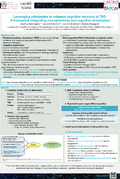
[en] Treatment-resistant depression (TRD) is commonly defined as failure of two or more antidepressant treatment attempts. TRD is characterized by persistent symptoms and functional impairment despite stepped-care approaches. Cognitive dysfunction often persists beyond mood recovery, predicting poor functional outcomes and reduced response to standard psychotherapeutic treatments. Neuroimaging evidence indicates that these deficits reflect large-scale network dysregulation, particularly within cognitive control and cortico-limbic circuits that remains inadequately addressed by current treatments.
Esketamine has emerged as a rapidly acting augmentation strategy used in TRD. Beyond its glutamatergic antidepressant effects, evidence suggests that esketamine may transiently enhance neural plasticity while maintaining overall cognitive safety. These findings support a plasticity-window model, in which pharmacologically induced plasticity may transiently facilitate—rather than replace—experience-dependent consolidation processes.
However, how this transient plasticity window can be optimally leveraged by cognition-oriented psychotherapies remains largely unexplored.
In this poster, we propose a mechanistic framework pairing plasticity-enhancing interventions with targeted cognitive-functional remediation to promote durable network-level and functional recovery. The model builds on evidence linking TRD-related cognitive deficits to dysregulation of cognitive control networks and on findings suggesting transient plasticity enhancement following esketamine administration. From this integration, we derive explicit, testable predictions regarding (1) which cognitive and psychotherapeutic approaches may optimally complement pharmacologically induced plasticity, and (2) how treatment timing and patient cognitive profiles may moderate these effects across clinical profiles.
By framing psychotherapy-plasticity interactions in mechanistic terms, this model clarifies how rapid symptom improvement may translate into lasting clinical benefits and informs future trials in precision psychiatry.
Disciplines :
Psychiatry
Author, co-author :
Uyttersprot, Audrey ; Université de Mons - UMONS > Faculté de Psychologie et des Sciences de l'Education > Service de Psychologie cognitive et Neuropsychologie
Colomar, Aurore ; Université de Mons - UMONS > Faculté de Psychologie et des Sciences de l'Education > Service de Psychologie cognitive et Neuropsychologie ; Université de Mons - UMONS > Faculté de Médecine et de Pharmacie > Service de Neurosciences
Lefebvre, Laurent ; Université de Mons - UMONS > Faculté de Psychologie et des Sciences de l'Education > Service de Psychologie cognitive et Neuropsychologie
Rossignol, Mandy ; Université de Mons - UMONS > Faculté de Psychologie et des Sciences de l'Education > Service de Psychologie cognitive et Neuropsychologie
Language :
English
Title :
Leveraging esketamine to enhance cognitive recovery in treatment-resistant depression: A framework integrating neuroplasticity and cognitive remediation
Publication date :
05 June 2026
Event name :
8th European Society for Cognitive and Affective Neuroscience Meeting
Event place :
Rome, Italy
Event date :
June, 5
Audience :
International
Peer review/Selection committee :
Peer reviewed
Research unit :
P325 - Psychologie cognitive et Neuropsychologie
Research institute :
R550 - Institut des Sciences et Technologies de la Santé