Abstract :
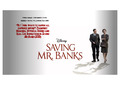
[en] In her seminal Theory of Adaptation (2013), Linda Hutcheon described adaptation notably as “a creative act of appropriation/salvaging”. Through the intertextual engagement implied by adaptation as a transmedia transposition, adapters appropriate the adapted texts, transforming them through the lens of their interpretation. In doing so, they may also reclaim these texts to existence. In her analysis of the adaptation of children’s literature, Deborah Cartmell (2007) observed a similar phenomenon in what she called the adaptation of “lesser-known” works, those “arguably fated to obscurity without the film” (p.168). It is perhaps not surprising that Cartmell’s case study for that category of children’s literature, which she differentiates from the adaptation of classic and popular children’s fiction, bears on Disney’s adaptation of P.L. Travers’s Mary Poppins. If Cartmell uncompromisingly reads Disney’s 1964 film as an “unashamed rewriting of the text” (p.174), which, in her view, reasserts the studio’s statement of the triumph of its productions over literature, she nonetheless acknowledges the fact that the film came to surpass its literary adapted source and “bec[a]me the ur-text in the minds of its viewers” (p.168). Mary Poppins is among Disney’s most favorite live-action films from the 1960s. Released two years before Walt’s demise, the film can easily be read as a form of testament, one through which Walt’s investment in the artistic process is akin to a swan song. This reading is essentially what John Lee Hancock’s 2013 film Saving Mr. Banks gives the audience to see.
In this presentation, I would like to interrogate the hybrid nature of Saving Mr Banks. The film can be read as part transmedia adaptation and part biopic. By weaving together elements derived from numerous sources, including the 2002 documentary In the Shadow of Mary Poppins, archive production material from the Disney Studio, and remakes of clips from the TV anthology Disneyland, the film beautifully engages with metafictional considerations and questions the Disney studios' adaptive and creative processes. Mary Poppins’s transposition from page to screen is presented as a literal and figurative negotiation in which mythical figures, Walt and Travers on the one hand, Travers’s father, Poppins herself, and Mr. Banks on the other, constantly engage in a balancing act between the authenticity of real-life inspirations and the creativity of imagination. The film continually plays with palimpsest memories: by interweaving powerfully poetic sequences evoking Travers's childhood in Australia with scenes showing her work with Walt, Don Da Gradi and the Sherman Brothers in 1960s Los Angeles, it seems to suggest a cyclical pattern in redeeming mythical father figures. By saving Mr. Banks, Disney’s 1964 adaptation may have salvaged Travers’s novels, but Lee Hancock’s 2013 film, by presenting the remediation of Walt’s and Travers’s life on film, certainly reopens the discussion of the biopic as personal mythmaking (Cartmell & Polasek, 2020).